
Restoration of the Historic 1903 Golf Course at Montgomery Country Club
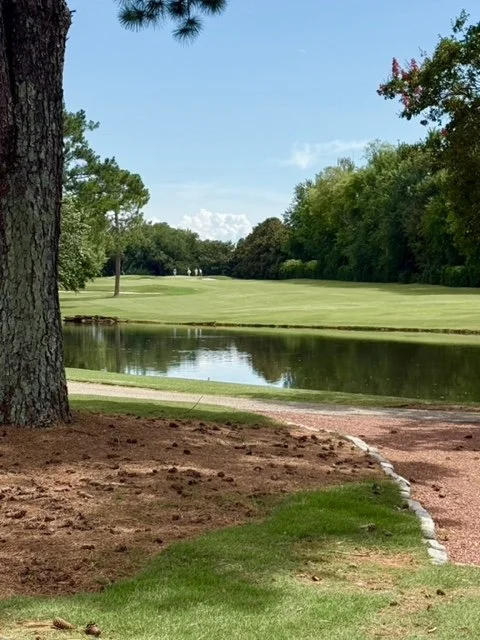
In early May 2026 the Montgomery Country Club broke ground on a significant golf course restoration project. Donors to the Foundation can designate all or a portion of their gifts to this project.
Founded in 1903, MCC is the social and recreational hub of the Cloverdale neighborhood. This anchoring institution is a frequently-used venue for civic organizations, meetings and competitive sports. Its golf course, also opened in 1903, is one of the oldest courses in Alabama. On March 16, 2026, the Alabama Historical Commission listed the MCC golf course in the Alabama Register of Landmarks and Heritage - - a designation that makes the course, as described by the Commission, “worthy of both recognition and preservation.”
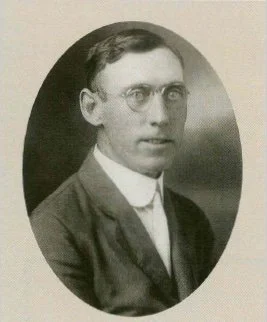
Expanded from 9 to 18 holes in 1907, the course stretched from the original clubhouse at Carter Hill Road and Mulberry Street, south down Narrow Lane Road, then back again in the classic links style favored by John M. “Jock” Inglis, a Scottish pro and designer of the course. Inglis is credited with the introduction of Bermuda grass as a playing surface in the Southeast.
After the clubhouse was lost to a fire in 1925 the club rebuilt at its present location on newly-acquired land that allowed expansion of the course’s footprint to its current dimensions. The course has undergone several modifications over its history, including a 2007 redesign by former U.S. Open Champion Jerry Pate , however, 11 of the original Inglis holes remain and can still be interpreted today .
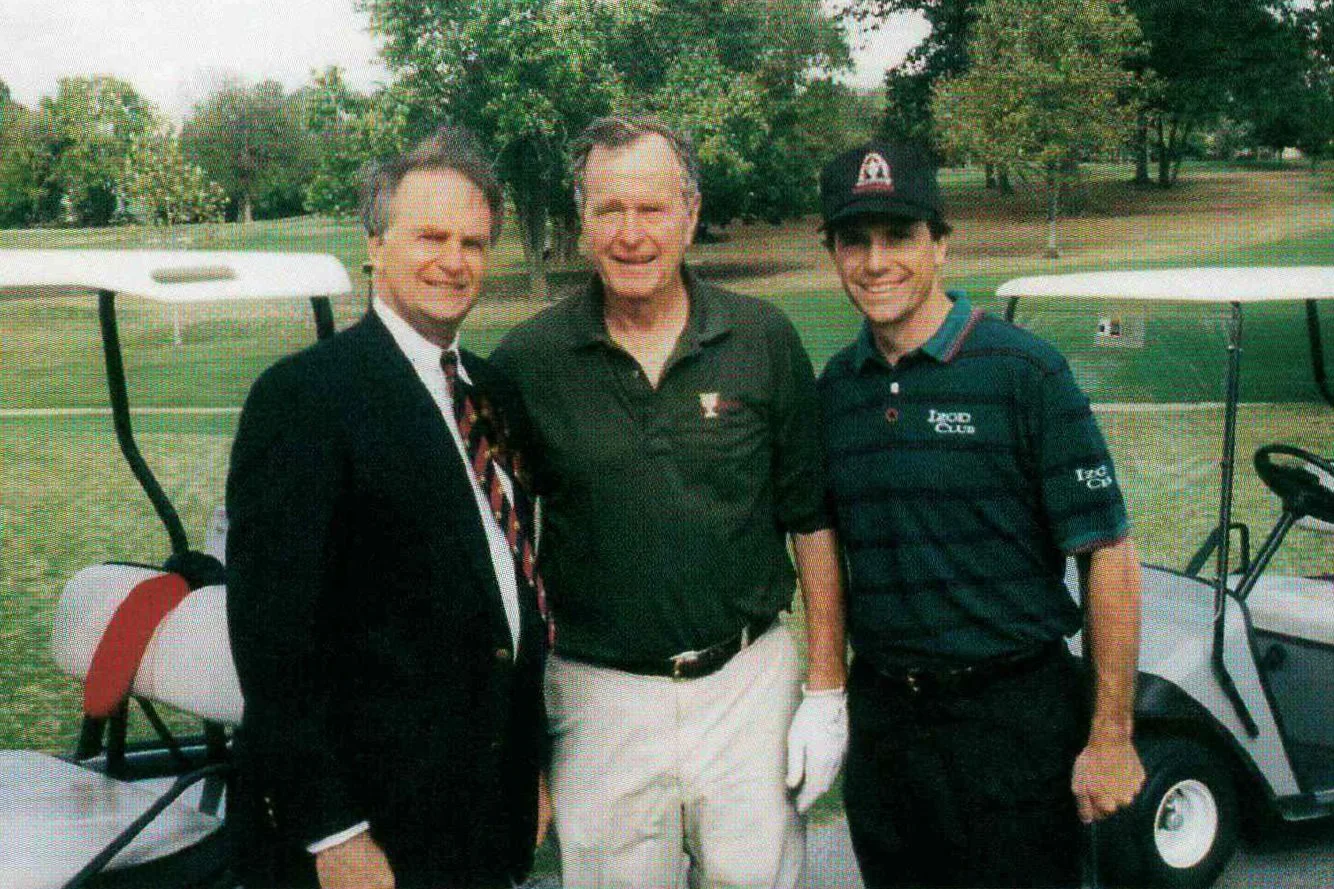
Pate is shown below on the first tee at MCC in 1996 with former U.S. President George H.W. Bush and former State Senator and University of Alabama Trustee Joe Fine.
At least nine Major Champions: Bobby Jones, Ben Hogan, Sam Snead, Patty Berg, Mickey Wright, Arnold Palmer, Jerry Pate, Tom Kite, and Jason Dufner have competed at MCC. Berg and Wright, respectively, won the Women’s Western Open Championship (still considered a Major by the LPGA) at MCC in 1957 and 1962. Charlie Boswell, the sport’s all-time leading blind golfer, won the International Blind Golfers Championship at MCC in 1969. Many other noteworthy figures from the worlds of sports, politics, entertainment and religion have enjoyed the course, including Rev. Billy Graham, Coach Paul “Bear” Bryant, and Hall of Fame quarterback Joe Namath, among others. MCC hosts one of the oldest amateur invitationals in the Southeast and has served as the venue for numerous Alabama Golf Association and United States Golf Association events, college tournaments and interscholastic matches.
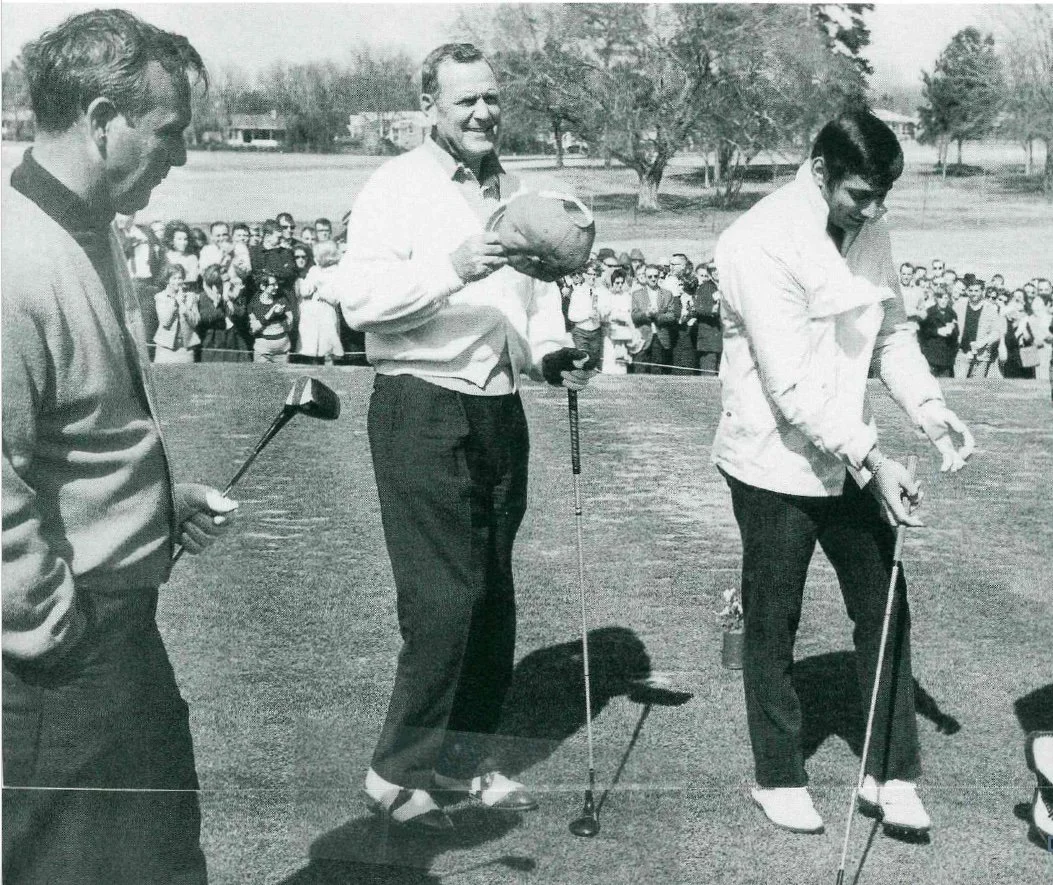
L-R above: Seven-time Major Champion Arnold Palmer; legendary University of Alabama football coach Paul W. “Bear” Bryant; and NFL Hall of Fame quarterback Joe Namath on the first tee at MCC.
How does a grant to renovate a golf course support the Foundation’s mission of community preservation? The golf course is surrounded by some of the most valuable and architecturally significant neighborhoods in Montgomery. For this reason, MCC’s prosperity is not only tied to Cloverdale, but also Idlewild, Edgemont, McGehee Estates and the Garden District, to name a few. If the golf course deteriorates over time, then the public perception of its value will decline, along with property values. This has happened time after time in Montgomery. The purpose of the Foundation is to push back in the most effective way possible, through the support of tangible capital projects that help maintain the value and livability of the neighborhood.